A La Karuta
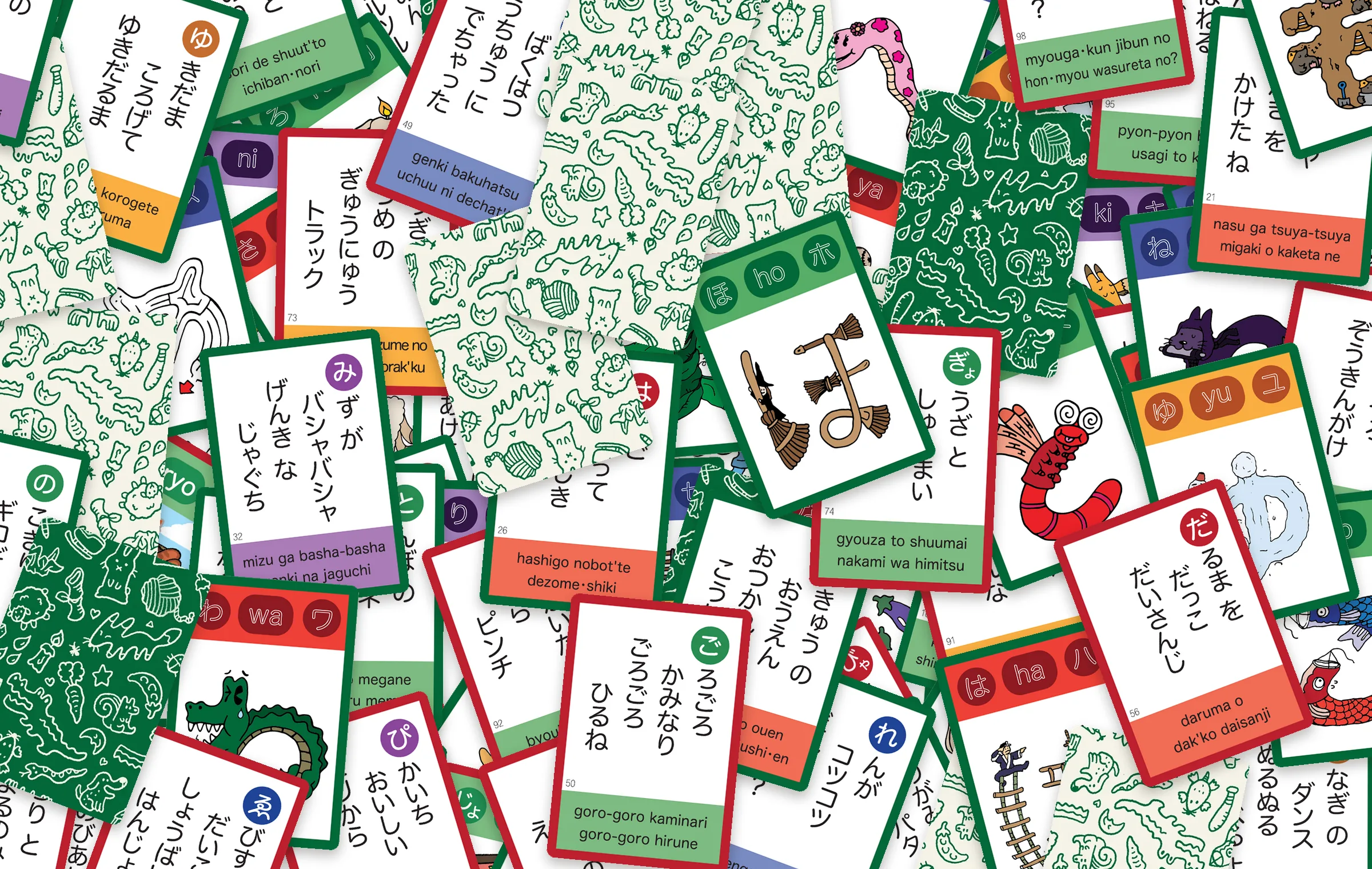
A La Karuta picture cards and reading cards scattered across a table, with green and white card backs

Hiragana karuta for kids and learners

Play your way into Japanese.

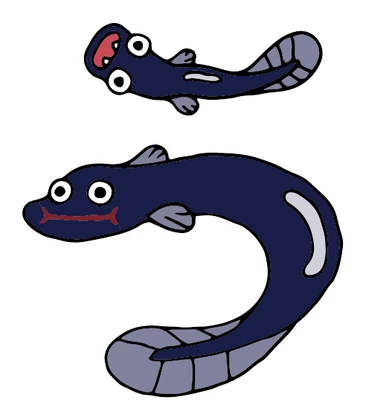
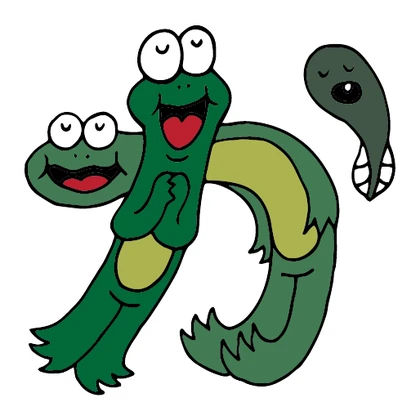
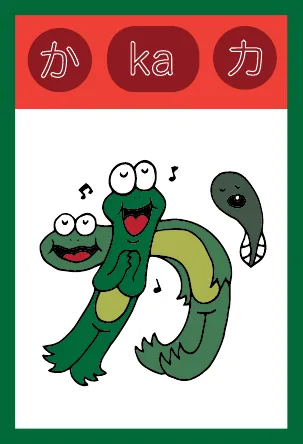
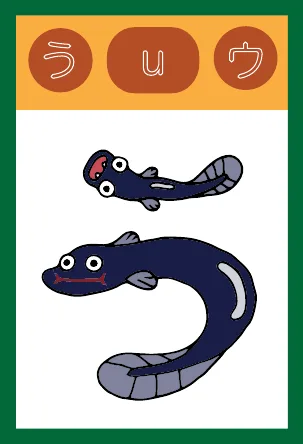
The card game where learning hiragana is a race to the right card. Each picture draws its letter as a word that starts with it: う as in うなぎ (eel), か as in かえる (frog).

Buy on Amazon US$45 Amazon Japanで購入¥2,855 + 税

208 cards · hiragana, katakana with romaji

Why a card game?

Every round is a listening, reading and speed lesson.

When you're racing to grab a card, you stop studying and start playing. Ears, eyes and hands all work at once, and that is exactly how new words stick.
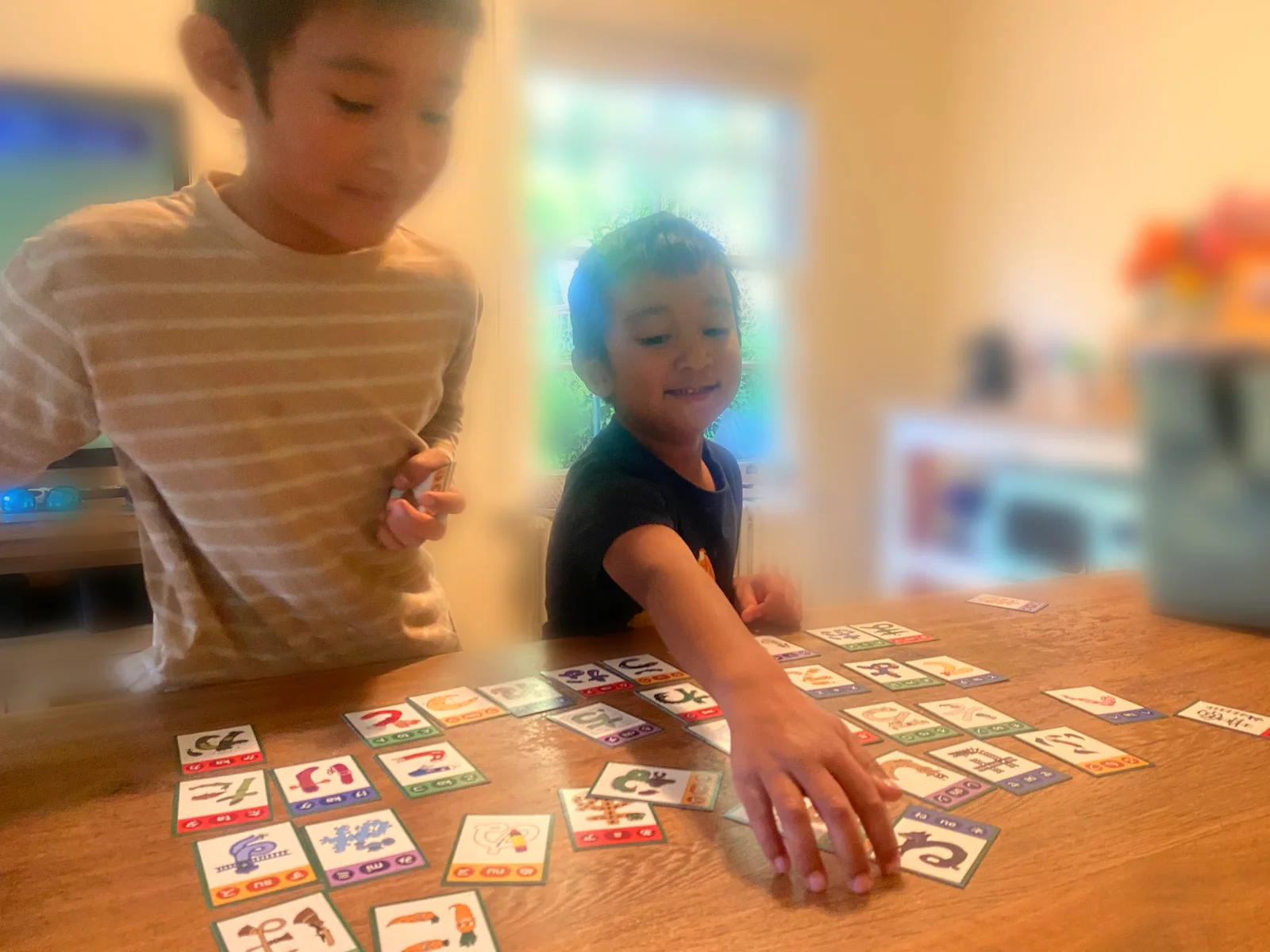
Two boys playing A La Karuta at a kitchen table, the younger one reaching to grab a picture card
Playtime at homeとった!
  1. Hear it

    A reader calls out a card. Everyone listens for the first sound.

    Listening
  2. Spot it

    Scan the table for the letter, or the picture shaped like it.

    Reading
  3. Grab it

    First hand on the card keeps it. Most cards wins.

    Speed and memory
See all 4 ways to play →

Watch

See a game in action.

A quick tour of both decks: the 45 green cards for basic hiragana, the red cards for every other sound, and how a round is played.

Watch on YouTube

The idea

Every letter hides in a picture.

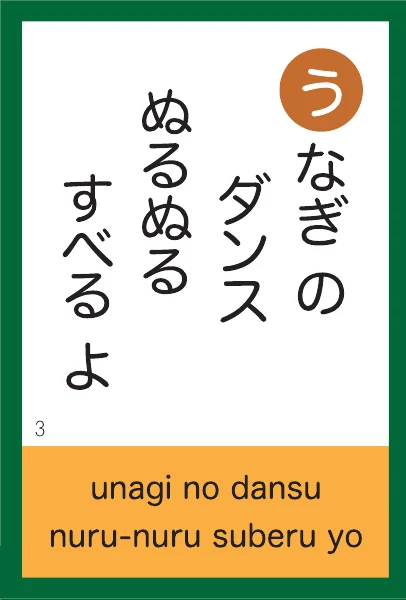
A Japanese teacher in Boston noticed her students forgot letters but never forgot pictures. So the う card is drawn as an うなぎ, the word it starts, bent into the shape of う. Tap the card to flip it.

Pick a letter

う as in うなぎ (unagi, eel)
Tap the card to see its picture ↻
What's in the box

208 cards. Every sound in Japanese.

Japanese has more than 50 sounds, so a 44-card set isn't enough. Two decks cover them all, each with picture cards and reading cards. Printed by Ōishi Tengudō, a long-established karuta maker in Kyoto.

Green deck 45 pairs Basic hiragana from あ to ん, each drawn in its own shape.
Red deck 59 pairs Dakuon が, handakuon ぱ, yōon きゃ and classical ゑ ゐ.

Made by a teacher

Thoughtful details for every kind of learner.

Pictures shaped like letters

Players can grab a card by the picture or by the letter, so beginners join in from the very first game.
Every sound, not just 46

Dakuon, handakuon and yōon cards teach the sounds most kana sets skip, along with Japanese onomatopoeia.
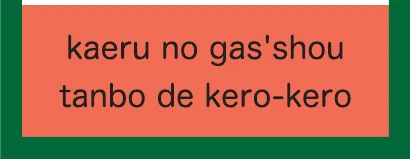
Romaji on every card

Picture and reading cards both carry romaji, so non-Japanese speakers can read along on day one.
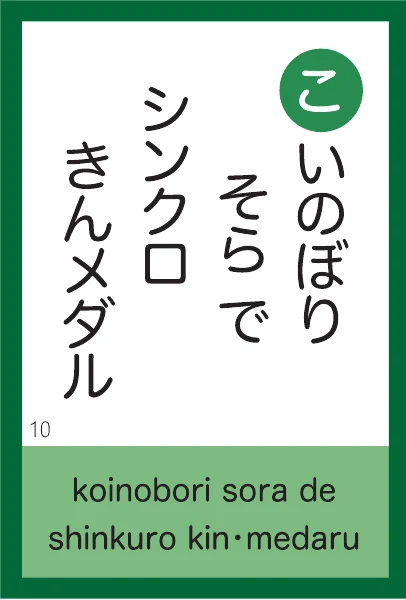
Japanese culture inside

Folk tales, customs, classics, wordplay and Buddhist tales are woven into the reading cards.

Rare ん and を cards

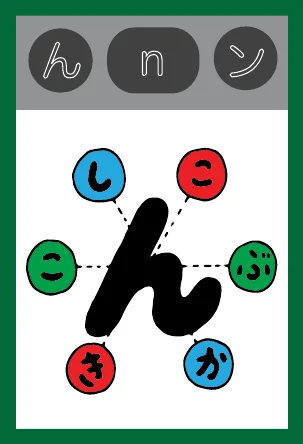
Two letters most karuta sets leave out, because no word starts with them. Here they get their own cards.
Classical kana for experts

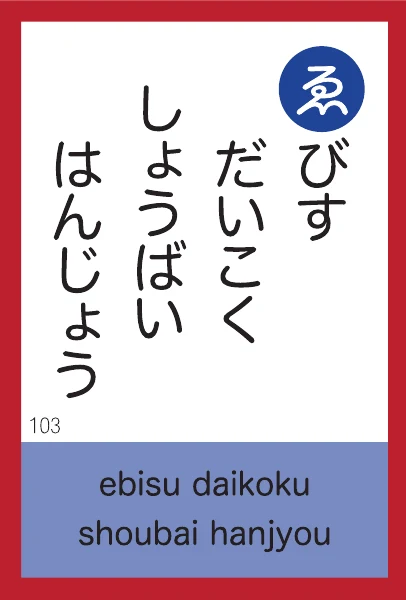
The historical letters ゑ and ゐ appear in advanced texts, for older learners and native speakers.
The reading cards

Every card tells a story.

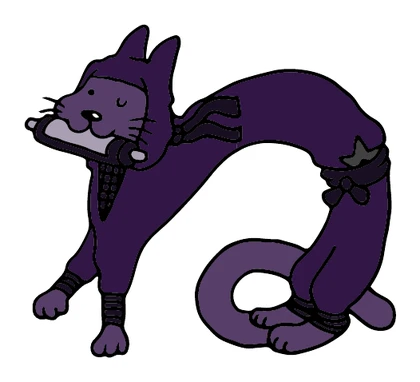
Folk tales, puns, onomatopoeia and myths: players pick up Japanese culture along with the letters.

Scroll sideways to see all 7 cards
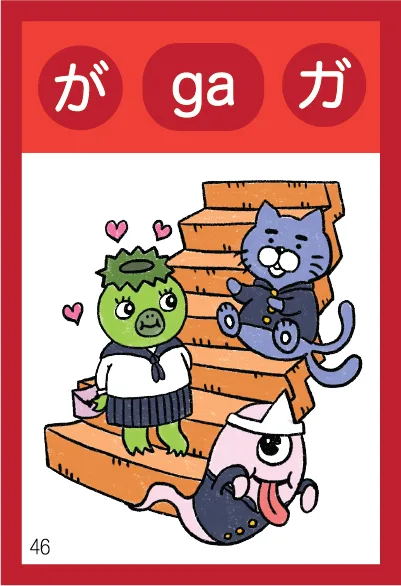
  • Reading card が (ga): kaidan
    Pun

    が · ga

    Kaidan means both “ghost story” and “staircase.” Empty schools are the classic setting for horror stories, so a school staircase makes the perfect pun.

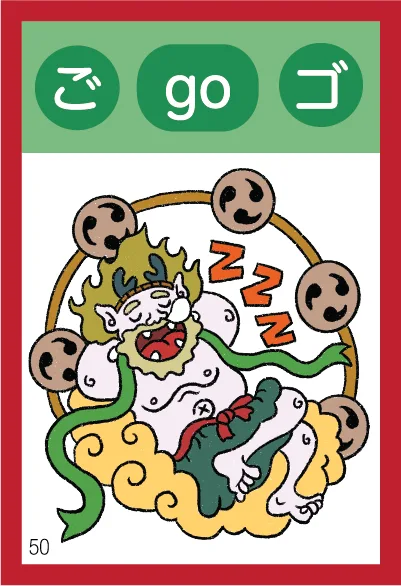
  • Reading card ご (go): the thunder god napping
    Onomatopoeia

    ご · go

    Goro-goro twice: once for rumbling thunder, and once for lazing around doing nothing.

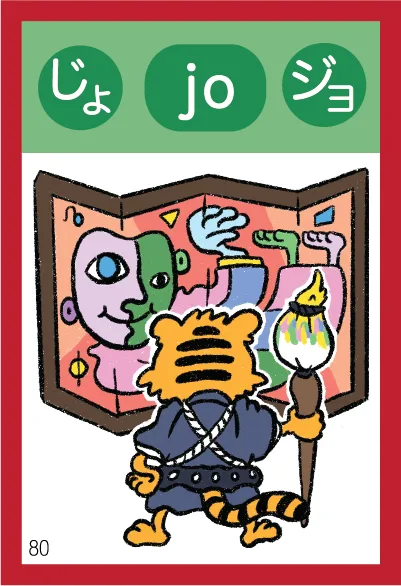
  • Reading card じょ (jo): Ikkyū and the tiger
    Historic tale

    じょ · jo

    The young monk Ikkyū was famous for his wit. Asked to catch the tiger painted on a folding screen, he asked for someone to chase it out first.

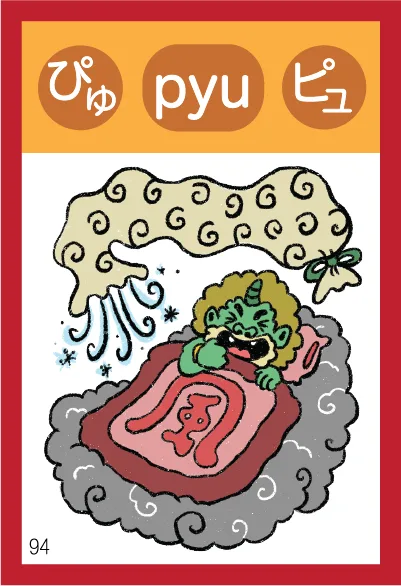
  • Reading card ぴゅ (pyu): the thunder god
    Myth

    ぴゅ · pyu

    Japan has many gods, and thunder was believed to be one of them drumming in the sky. Kaminari means “the god is drumming.”

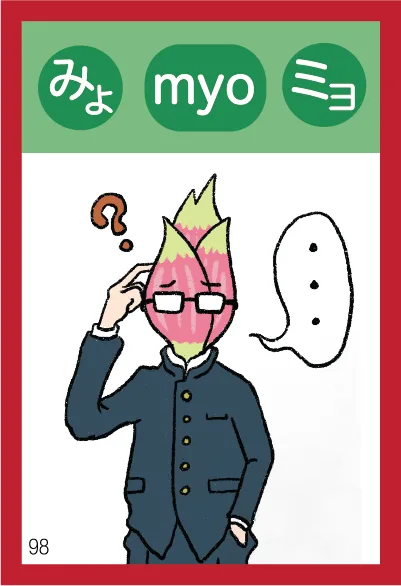
  • Reading card みょ (myo): myōga ginger
    Buddhist tale

    みょ · myo

    One of the Buddha’s pupils couldn’t remember even his own name. Legend says myōga ginger grew on his grave.

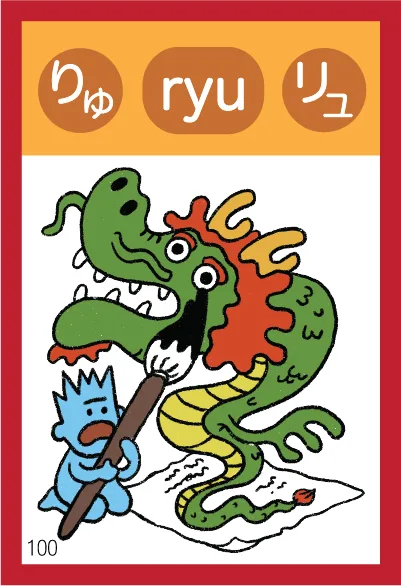
  • Reading card りゅ (ryu): painting the dragon
    Chinese idiom

    りゅ · ryu

    Garyō tensei, “dotting the dragon’s eyes,” means the finishing touch. Many Japanese words come from classic Chinese stories.

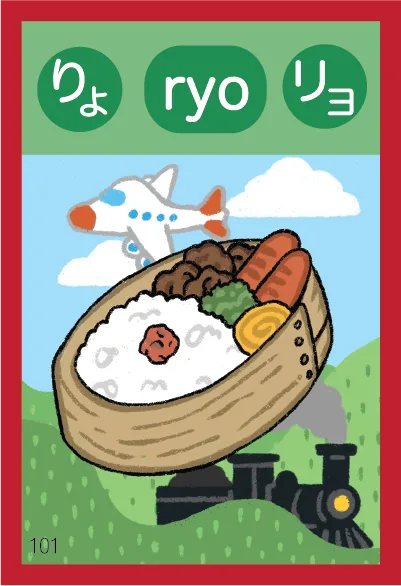
  • Reading card りょ (ryo): travel lunches
    Modern Japan

    りょ · ryo

    Ekiben and soraben are boxed lunches sold at stations and airports, packed with regional and seasonal treats.

The green deck

A hiragana chart made of pictures.

All 45 green cards in gojūon order, laid out like a traditional Japanese chart: read each column from top to bottom, starting on the right with あいうえお. The header color tells you the vowel:

  • a
  • i
  • u
  • e
  • o
Scroll sideways to see the whole chart
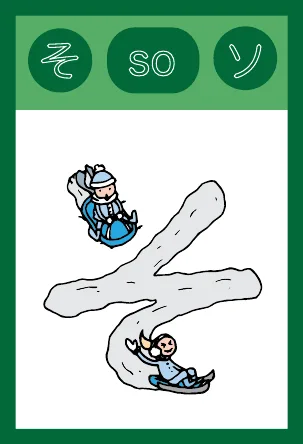
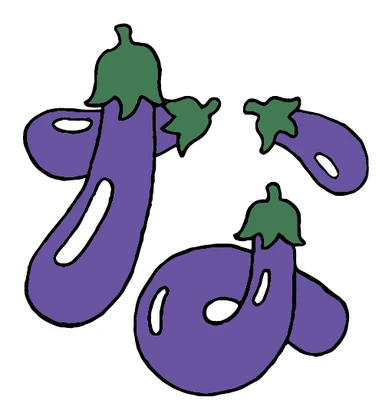
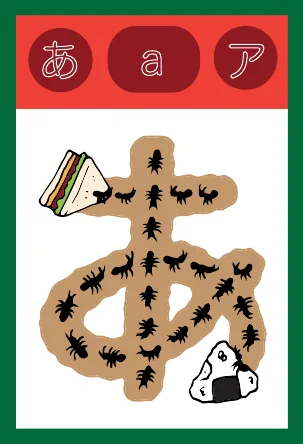
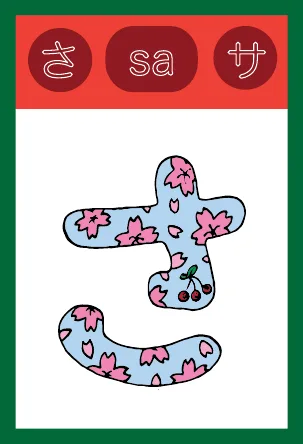
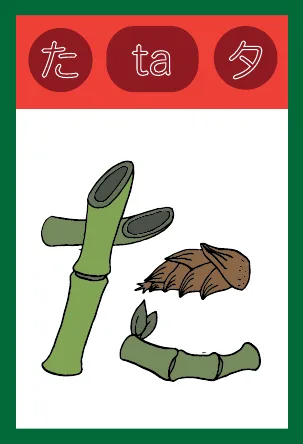
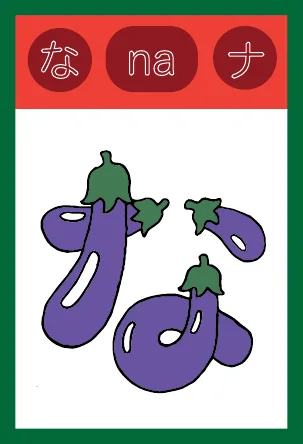
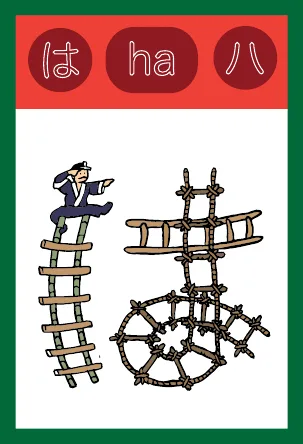
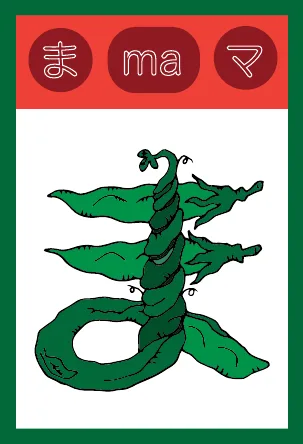
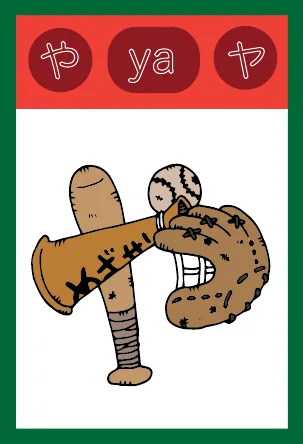
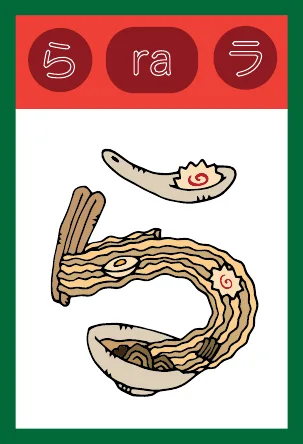
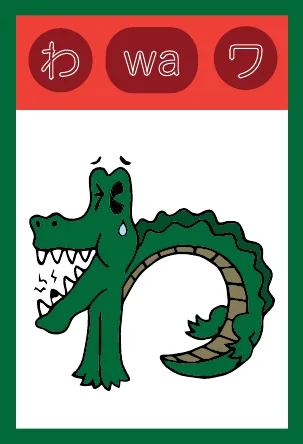
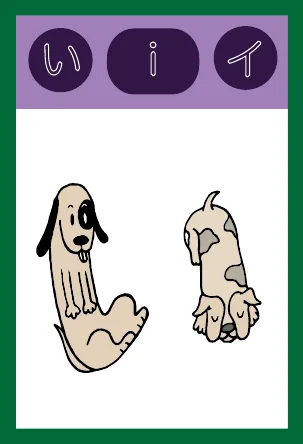
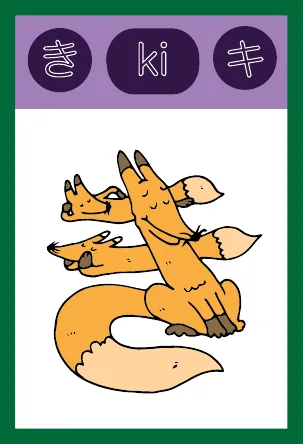
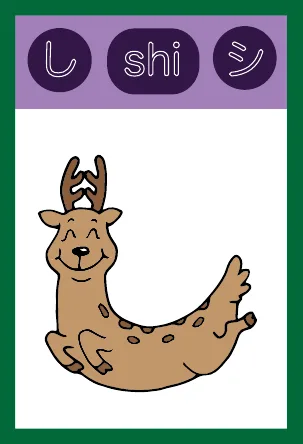
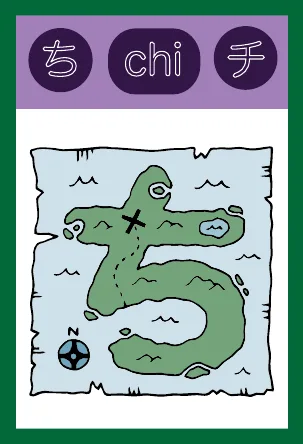
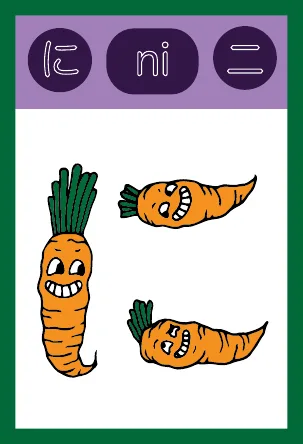
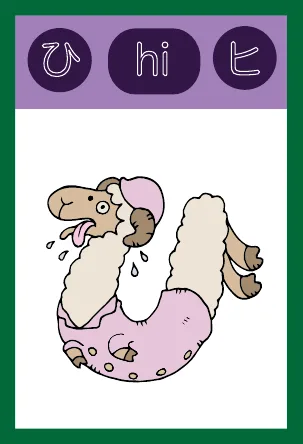
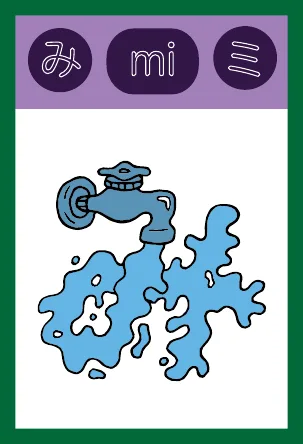
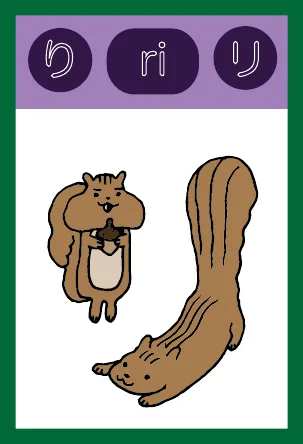
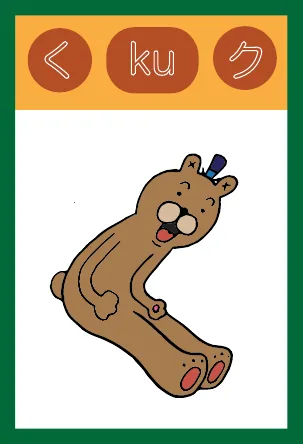
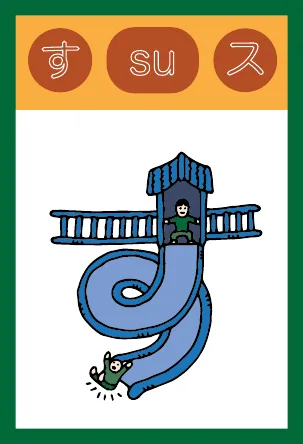
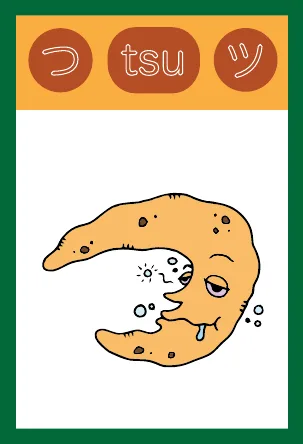
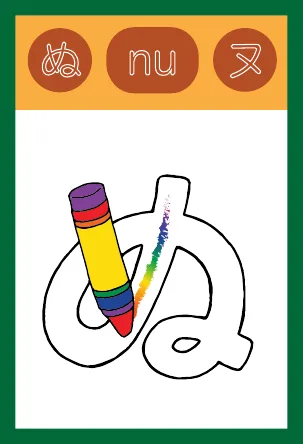
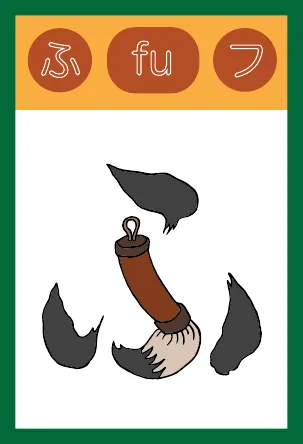
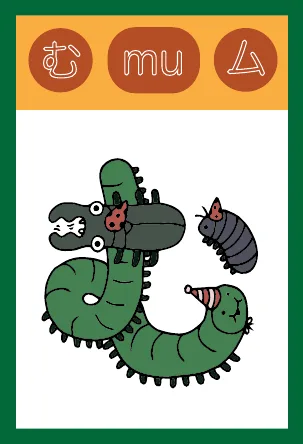
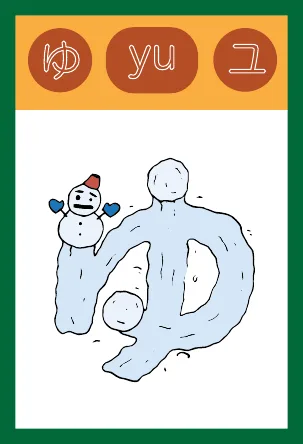
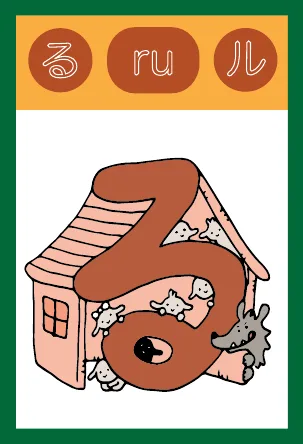
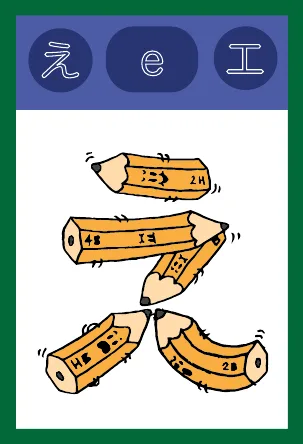
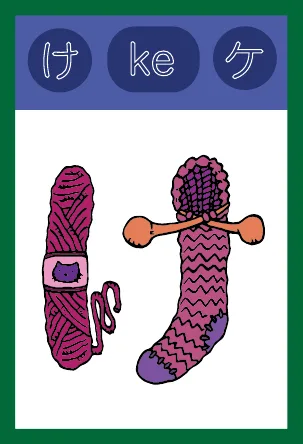
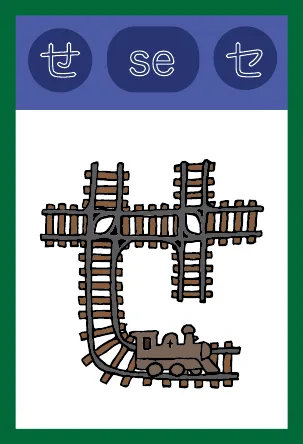
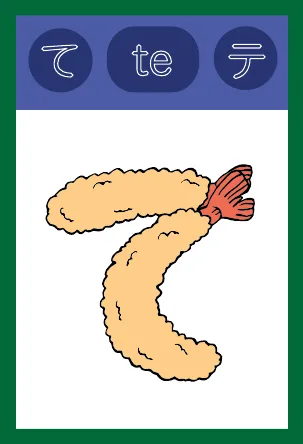
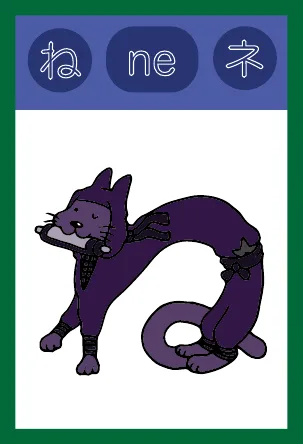
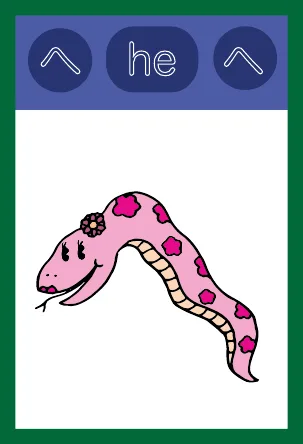
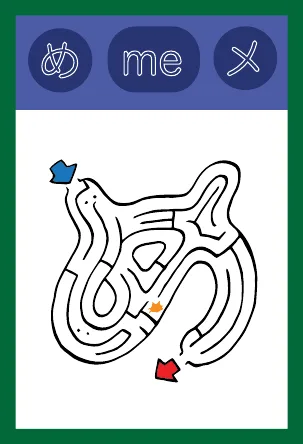
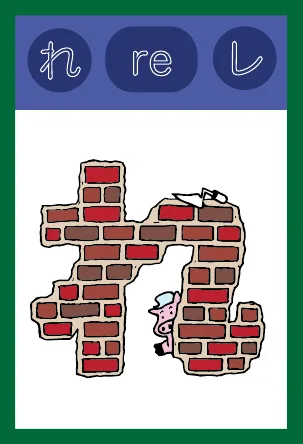
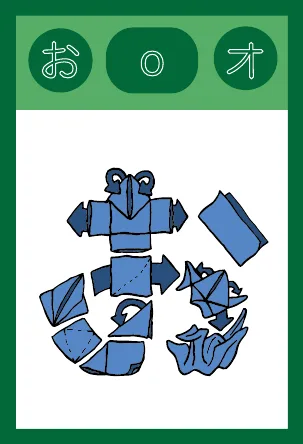
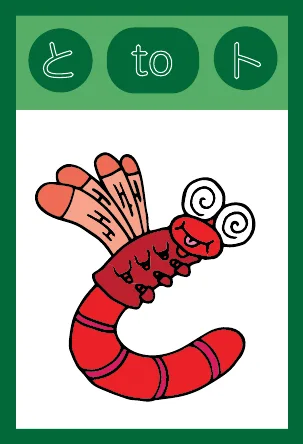
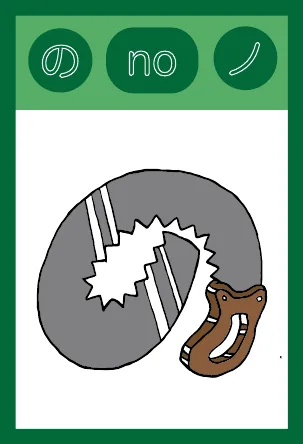
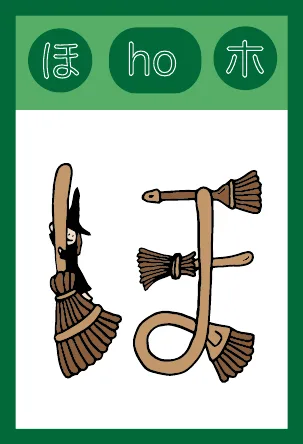
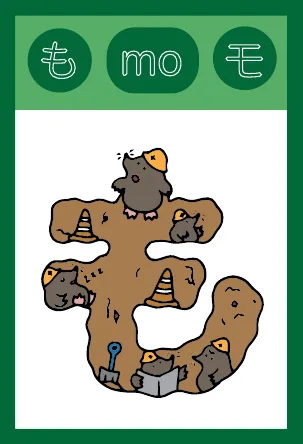
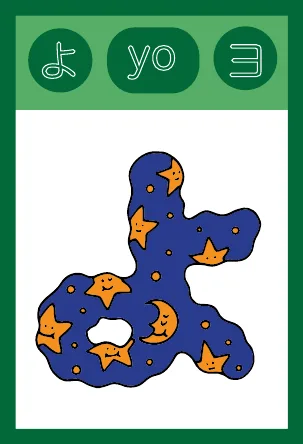
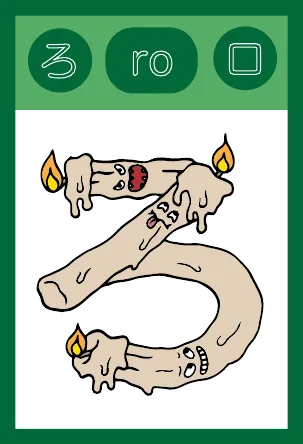
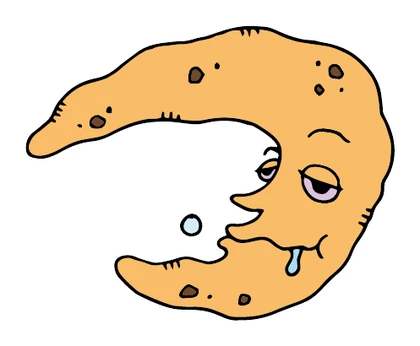
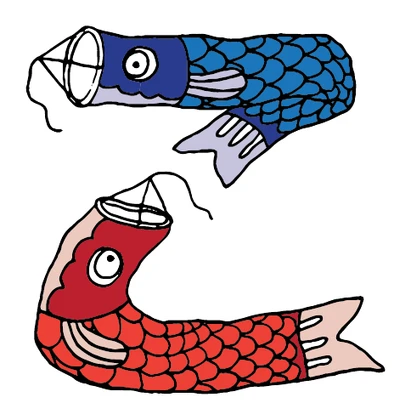
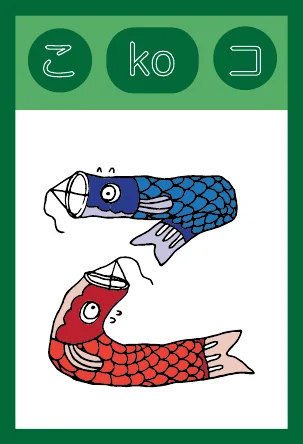
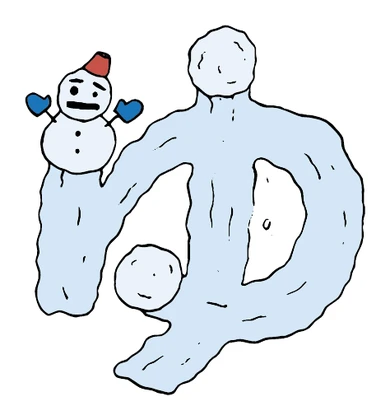
Hiragana あ (a) picture card: あ as in あり ari, ants, drawn in the shape of あ Hiragana か (ka) picture card: か as in かえる kaeru, frog, drawn in the shape of か Hiragana さ (sa) picture card: さ as in さくら sakura, cherry blossom, drawn in the shape of さ Hiragana た (ta) picture card: た as in たけのこ takenoko, bamboo shoot, drawn in the shape of た Hiragana な (na) picture card: な as in なす nasu, eggplant, drawn in the shape of な Hiragana は (ha) picture card: は as in はしご hashigo, ladder, drawn in the shape of は Hiragana ま (ma) picture card: ま as in まめ mame, beans, drawn in the shape of ま Hiragana や (ya) picture card: や as in やきゅう yakyū, baseball, drawn in the shape of や Hiragana ら (ra) picture card: ら as in ラーメン rāmen, drawn in the shape of ら Hiragana わ (wa) picture card: わ as in わに wani, crocodile, drawn in the shape of わ Hiragana ん (n) picture card: ん as in しりとり shiritori word game, drawn in the shape of ん Hiragana い (i) picture card: い as in いぬ inu, dog, drawn in the shape of い Hiragana き (ki) picture card: き as in きつね kitsune, fox, drawn in the shape of き Hiragana し (shi) picture card: し as in しか shika, deer, drawn in the shape of し Hiragana ち (chi) picture card: ち as in ちず chizu, map, drawn in the shape of ち Hiragana に (ni) picture card: に as in にんじん ninjin, carrot, drawn in the shape of に Hiragana ひ (hi) picture card: ひ as in ひつじ hitsuji, sheep, drawn in the shape of ひ Hiragana み (mi) picture card: み as in みず mizu, water, drawn in the shape of み Hiragana り (ri) picture card: り as in りす risu, squirrel, drawn in the shape of り Hiragana う (u) picture card: う as in うなぎ unagi, eel, drawn in the shape of う Hiragana く (ku) picture card: く as in くま kuma, bear, drawn in the shape of く Hiragana す (su) picture card Hiragana つ (tsu) picture card: つ as in つき tsuki, moon, drawn in the shape of つ Hiragana ぬ (nu) picture card: ぬ as in ぬりえ nurie, coloring, drawn in the shape of ぬ Hiragana ふ (fu) picture card: ふ as in ふで fude, brush, drawn in the shape of ふ Hiragana む (mu) picture card Hiragana ゆ (yu) picture card: ゆ as in ゆきだるま yukidaruma, snowman, drawn in the shape of ゆ Hiragana る (ru) picture card Hiragana え (e) picture card: え as in えんぴつ enpitsu, pencil, drawn in the shape of え Hiragana け (ke) picture card: け as in けいと keito, yarn, drawn in the shape of け Hiragana せ (se) picture card: せ as in せんろ senro, railway tracks, drawn in the shape of せ Hiragana て (te) picture card: て as in てんぷら tenpura, shrimp tempura, drawn in the shape of て Hiragana ね (ne) picture card: ね as in ねこ neko, cat, drawn in the shape of ね Hiragana へ (he) picture card: へ as in へび hebi, snake, drawn in the shape of へ Hiragana め (me) picture card: め as in めいろ meiro, maze, drawn in the shape of め Hiragana れ (re) picture card: れ as in れんが renga, bricks, drawn in the shape of れ Hiragana お (o) picture card: お as in おりがみ origami, drawn in the shape of お Hiragana こ (ko) picture card: こ as in こいのぼり koinobori, carp streamer, drawn in the shape of こ Hiragana そ (so) picture card: そ as in そり sori, sled, drawn in the shape of そ Hiragana と (to) picture card Hiragana の (no) picture card Hiragana ほ (ho) picture card: ほ as in ほうき hōki, broom, drawn in the shape of ほ Hiragana も (mo) picture card Hiragana よ (yo) picture card: よ as in よる yoru, night, drawn in the shape of よ Hiragana ろ (ro) picture card: ろ as in ろうそく rōsoku, candles, drawn in the shape of ろ

For every table

Who plays A La Karuta?
Toddlers playing with alphabet blocks on the floor with a parent

Families

Kids learn hiragana by playing with parents and grandparents. No reading needed to start: just spot the picture.
Two children writing together in an open workbook

Japanese learners

Romaji on every card and stories from real Japanese culture make it study that doesn’t feel like studying.
A boy writing at a classroom table with other children

Teachers and schools

Made by a Japanese teacher for the classroom. Play the full deck, or pick a few rows to match the lesson.

Born in Boston, made in Kyoto

40 years of teaching, in one box.

Kyoko Hiromoto has taught Japanese for 40 years, to international students and to Japanese children growing up overseas. A La Karuta packs every hint she learned in those classrooms into a game the whole family can play.

Designed by Kyoko Hiromoto × Hayato Jin Kawai · Boston Nakamaro Karuta Club
Where to buy

In store, Boston area